Shipping design changes directly
Context
Planificando generates lesson-plan sequences for primary school teachers in Argentina. The team is five people, two of them technical. I own the design surface: product UX, UX writing, brand, and landing.
By early 2026 we knew what was broken. A usability report I built from field observation, session replays, and analytics had identified 17 UX issues, prioritized P0/P1. The problem was shipping the fixes.
The problem
Every interface change followed the same path: I designed it, wrote a ticket, and waited. With a two-person tech team focused on model quality and infrastructure, design tickets were usually deprioritized. Details got lost in translation. Some fixes waited for months; the interface redesign from a year earlier had been frozen almost entirely.
The method change
In April 2026 I stopped requesting changes and started implementing them.
- Claude Code with a custom skill built for Planificando's codebase, so implementation follows the project's conventions.
- I design and implement frontend changes directly: UX writing, visual adjustments, layout, new screens.
- Tech reviews every PR before merge.
To be precise about what this is and isn't: I'm not a developer. I'm a designer who can take a change from Figma to a reviewed pull request. Backend, data model, and infrastructure remain with the tech team.
The same working method produced the V2 changes in case 01.
What shipped
- A text library for Language: a new page with filters (genre, length, grade) and text selection integrated into the planning flow.
- "Regenerate" renamed to "Request changes", plus onboarding (detailed below).
- A unified design system in code: single palette, consistent icons, shared components.
- The waiting screen: replaced a spinner with 11 rotating pedagogical tips and a progress bar.
- The editing screen: clear hierarchy, pill buttons, inline title editing.
- A diff view for "Request changes": word-level highlights of what the AI changed, a side panel with three states, "Undo all".
- Smaller fixes: destructive actions in red, filters in "My plans", a two-column login, fixed toolbar.
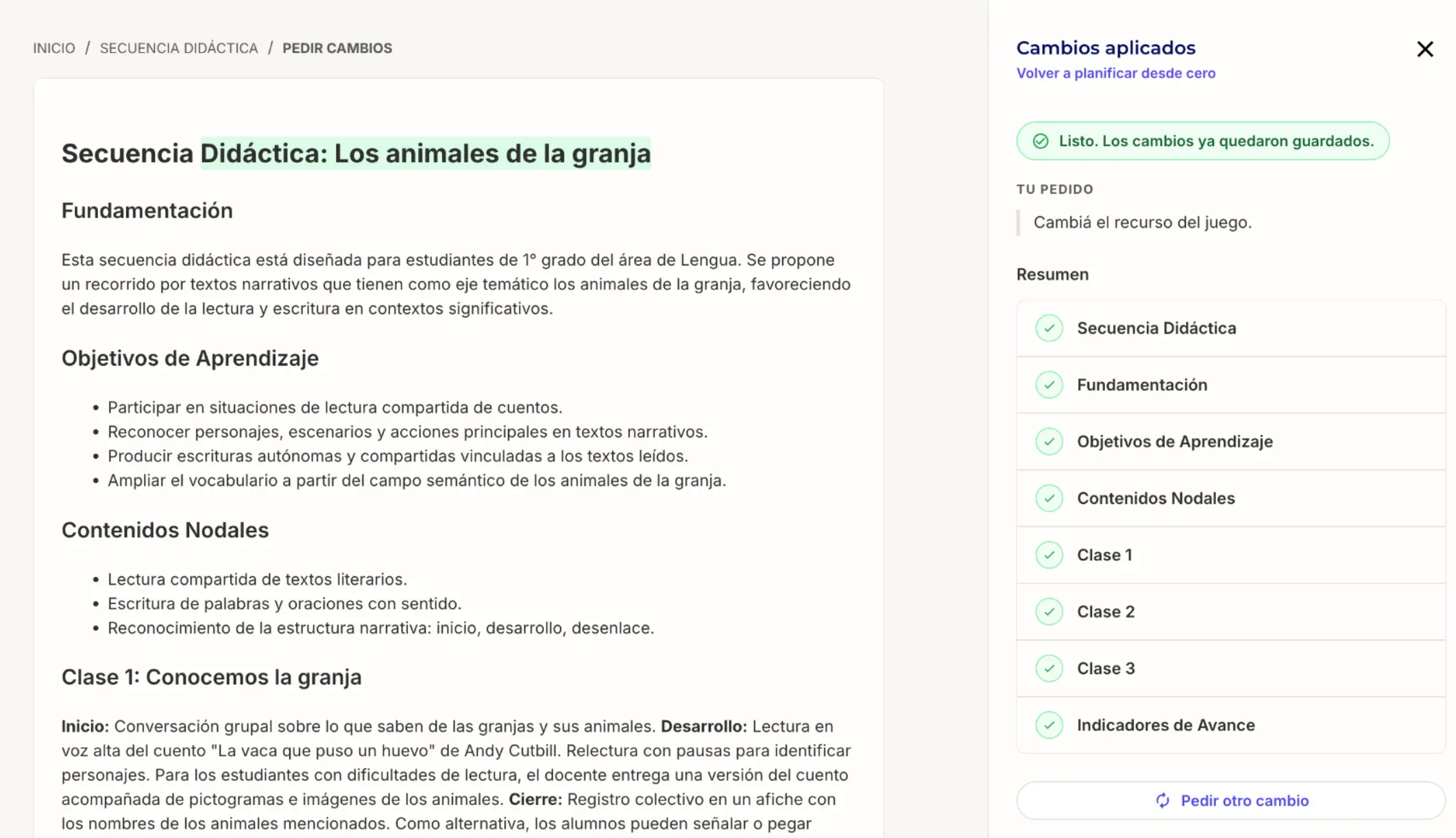
One change in detail: "Regenerate" → "Request changes"
The regeneration feature lets teachers ask the AI to modify a plan it just generated. In the months before the change it was barely being found: 20% of teachers who created a plan ever used it, at a ratio of 0.31 requests per plan. Field observation pointed at two causes — teachers didn't know what "Regenerate" meant, and they were unsure whether asking for a change would cost them the version they already had.
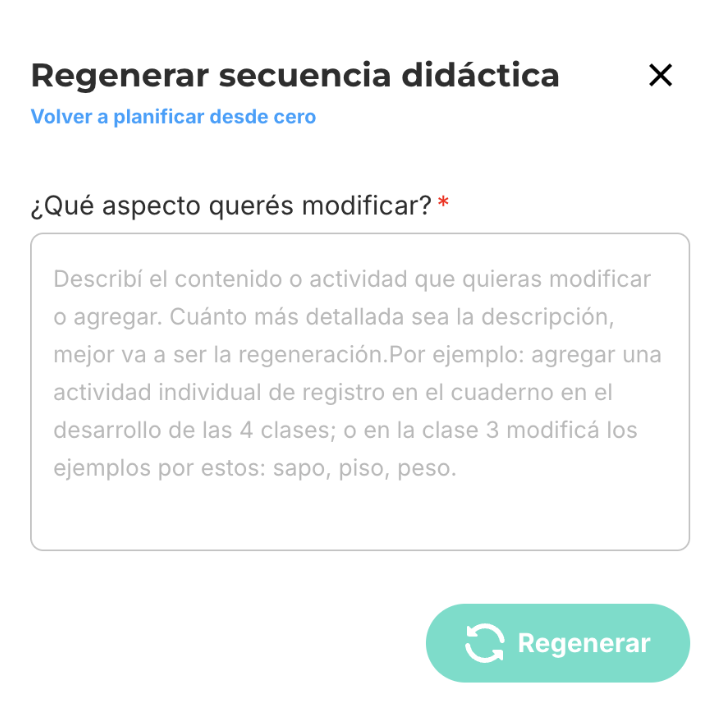
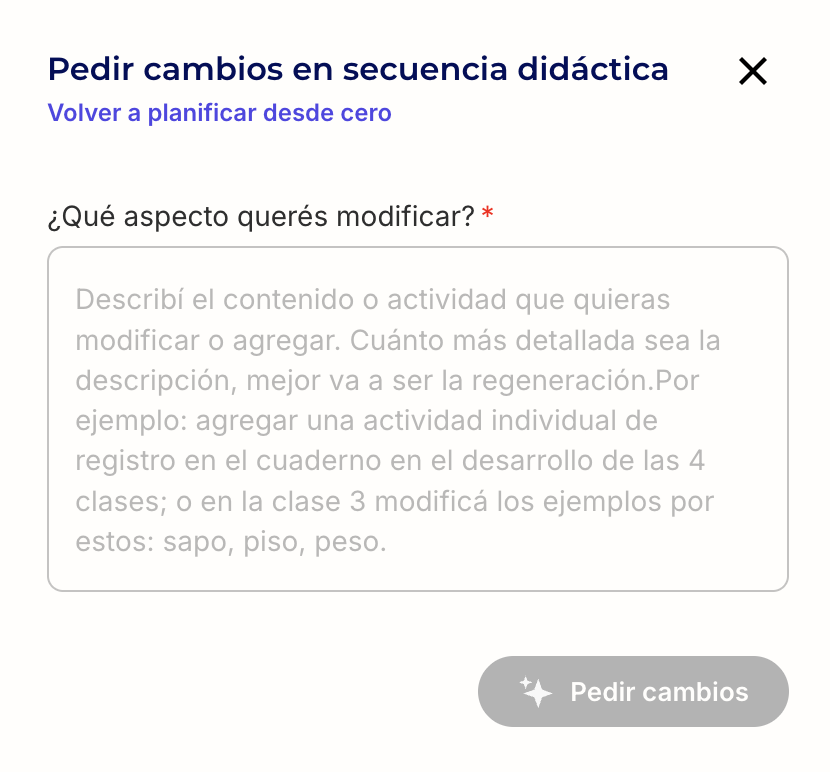
The same modal before and after May 13. Beyond the verb, the redesign moved the modal to the unified palette and dropped the ambiguous "regenerate" icon.
Result
In the 30 days before the change, 19% of teachers who created a plan used the feature (10 of 53). In the 30 days after, 41% did (24 of 59), holding at 44% the following month. The ratio of requests per plan doubled, 0.31 to 0.62.
The lift was adoption, not intensity. Teachers who already used the feature averaged 3.5 requests each, before and after. The rename didn't make anyone iterate more — it brought in people who weren't using it at all. Which is exactly what a naming fix should do, and a useful limit on what to claim for it.
What it didn't fix
The onboarding said nothing would be lost. Teachers didn't believe it.
Reading what they actually wrote in the request field, 70% of consecutive requests from the same teacher contained the previous request in full — up from 49% before the change. Each round they re-pasted their entire list of edits and appended the new one. The longest ran to 16,000 characters.
Two things in the code made that painful to read. Every version stored a pointer to the one before it, so the original was never lost — 431 of 431 times. And the system already passed the previous request to the model automatically. The product was non-destructive and it had memory. It just never said so, so teachers did the remembering by hand.
The rename brought more people into a flow that was still asking them to work around it. That's what sent the interaction itself back to the drawing board: in V2 a request is anchored to the fragment you want changed, with your earlier requests visible. Re-sending there is zero, across 93 consecutive requests.
The rename is a small UX-writing story with an honest ceiling: it fixed discovery and nothing else. The larger change is throughput. The evidence for most of these fixes had existed for months, waiting on a queue that never cleared. For a small team, a designer who can ship — with review, within scope — changes the economics of iteration.